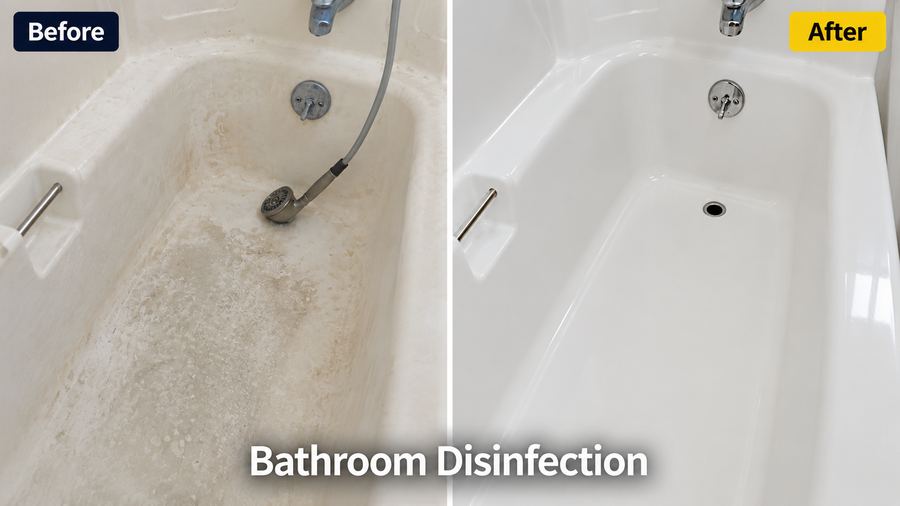
Bathroom Cleaning at a Glance
| Best For | Bathrooms needing a thorough, systematic clean that addresses both visible surfaces and commonly overlooked hidden areas |
| Service Type | Included as part of standard cleaning; deeper detailing available with deep cleaning |
| What Standard Cleaning Includes | Toilet, sink, shower/tub, countertops, mirrors, floors, and accessible hidden areas like toilet hinge caps when safely accessible |
| When Sanitizing or Disinfecting May Be Used | On appropriate, compatible surfaces where a labeled product's instructions are followed, including full contact time |
| What's Excluded | Biohazard remediation, sewage cleanup, sharps handling, mold remediation, and medical-grade infection control |
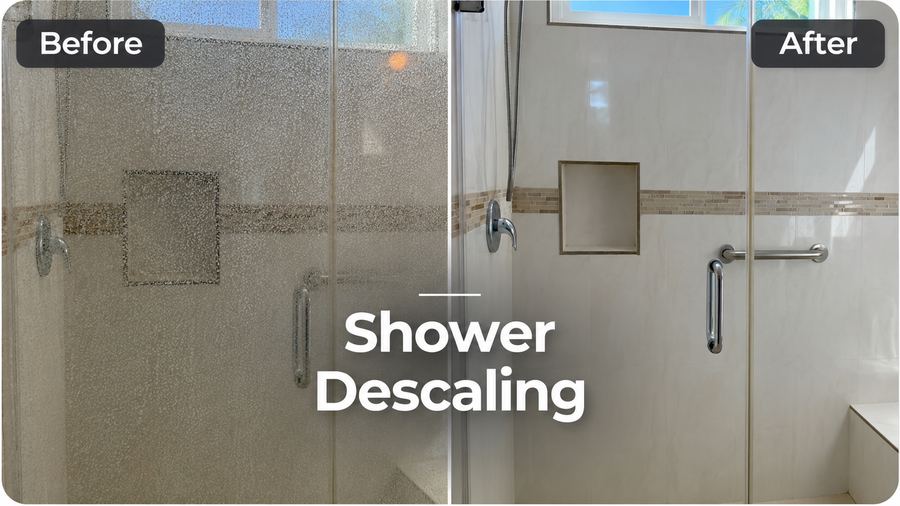
| What May Improve | Soap residue, body oils, surface grime, dust, accessible urine residue, fingerprints, light removable mineral film |
| What May Remain | Etched glass, corroded fixtures, failed caulk, loose toilet seats, cracked grout, permanent staining, leaks |
| Main Safety Rule | Toilet tools and cloths never move to cleaner zones — clean-to-dirty workflow, every time |
| When Service May Be Declined | Sewage, sharps, significant bodily fluid contamination, extensive mold-like growth, or unresolved active leaks |
| Cities Served | San Marcos, Carlsbad, Oceanside, Vista, Escondido, and surrounding North County San Diego communities |
Cleaning vs. Sanitizing vs. Disinfecting
These words get used interchangeably all the time, but they mean different things — and being precise about which one applies matters for what you should expect.
| Term | What It Means | What It Requires | What Homeowners Should Know |
|---|---|---|---|
| Cleaning | Removes soil, residue, and organic matter | A compatible cleaner, friction, and physical removal | Usually comes first, before anything else |
| Sanitizing | Reduces microorganisms according to a labeled method | The correct product, concentration, and contact time | Not identical to disinfecting |
| Disinfecting | Kills specified organisms on approved surfaces, according to an EPA-registered label | Pre-cleaning when the label requires it, full wet contact time, a compatible surface, and label compliance | Doesn't mean every organism, and doesn't apply to every surface |
| Deodorizing | Reduces odor or odor sources | Cleaning or a specific odor-control method | Doesn't necessarily sanitize or disinfect anything |
We don't use these terms interchangeably in our own process, and we'd encourage you to be skeptical of any cleaning company that does.
Why Cleaning Usually Comes Before Disinfection
Dirt, soap residue, body oils, and other organic matter can interfere with how well a disinfectant actually performs. Many product labels require the surface to be visibly clean before the disinfectant is applied — skipping that step can mean the product isn't working the way its label claims it will.
A few other things worth understanding:
- Disinfectant needs to remain wet for its full label-listed contact time to work as intended.
- Wiping it dry too quickly — something that happens easily when someone's in a hurry — can prevent the product from doing what it's supposed to do.
- Some products require rinsing afterward, particularly on surfaces that will contact skin or food.
- Not every bathroom surface needs, or can tolerate, a disinfectant — some materials are better served by cleaning alone.
Where Bathroom Residue Actually Hides
A bathroom can appear completely clean while contamination remains in spots most people never think to check:
- Toilet-seat hinges
- Mounting caps covering hinge hardware
- The toilet base and area around the floor bolts
- Behind the toilet
- Faucet bases and handle seams
- Sink overflow openings, when accessible
- Shower-door tracks
- Grout and caulk edges
- Cabinet handles
- Light switches
- Door handles
- Floor edges
We don't claim to reach every inaccessible space — some contamination genuinely sits beneath fixed mounting hardware that isn't designed to be opened during routine service. What we do focus on are the accessible hidden areas that routine wiping consistently misses, which is where a lot of the real difference between an average clean and a thorough one shows up.
Toilet-Seat Hinges: What's Actually Accessible
Toilet seat hinges and the hardware underneath decorative caps are some of the most overlooked areas of any bathroom. Moisture, dust, and residue accumulate around this hardware, yet most homeowners never inspect it, let alone clean it.
Here's how we approach it, and where the limits are:
- Hinges and caps are inspected before we touch anything.
- We only lift or open components that are designed for routine access.
- Nothing brittle, corroded, painted shut, or otherwise damaged is forced open.
- Standard cleaning does not include removing a mounted toilet seat entirely, unless that's specifically arranged and within scope for that visit.
- Loose seats, damaged hardware, or corrosion may point toward replacement or repair rather than more aggressive cleaning.
- Some contamination may remain inaccessible beneath fixed mounting hardware that isn't meant to be disassembled during a cleaning visit.
This is one of the details that most separates a systematic clean from a quick wipe-down — but it's not the same as full disassembly, and we're upfront about that distinction.
Bathroom Surface Materials
Different bathroom surfaces call for different products and techniques — there's no universal cleaner that's safe and effective on everything.
| Surface | Common Soil | Main Cleaning Concern | Main Product Precaution |
|---|---|---|---|
| Porcelain / vitreous china | Hard water, soap scum, urine residue | Generally durable but can etch over time | Avoid harsh acids on aged or etched surfaces |
| Acrylic | Soap film, light scratching from abrasives | Can scratch or dull with aggressive scrubbing | Avoid abrasive pads and powders |
| Fiberglass | Soap scum, mildew in grout-like seams | Gelcoat can dull with harsh chemicals | Avoid strong solvents |
| Natural stone | Soap film, hard water, etching from acids | Porous and acid-sensitive | Avoid acidic cleaners (vinegar, some descalers) entirely |
| Quartz | Soap residue, light grime | Generally durable | Avoid highly alkaline or abrasive products |
| Cultured marble | Soap scum, hard water | Can dull or scratch | Avoid abrasive powders |
| Chrome | Water spots, fingerprints | Can show scratches from abrasives | Avoid abrasive pads |
| Brushed nickel | Fingerprints, water spots | Can lose finish with harsh scrubbing | Avoid abrasive cleaners |
| Matte black fixtures | Fingerprints, water spots (show more visibly) | Finish can be damaged by abrasives | Avoid anything abrasive; use soft cloths |
| Brass | Tarnish, water spots | Can tarnish or corrode with the wrong product | Avoid acidic or abrasive cleaners on unlacquered brass |
| Glass | Soap scum, hard water | Can etch with prolonged mineral exposure | Avoid abrasive scrubbers |
| Painted cabinetry | Grime, fingerprints | Finish can wear with harsh solvents | Avoid solvent-based cleaners |
| Wood | Moisture damage, grime | Sensitive to standing water | Minimize moisture; avoid soaking |
| Grout and caulk | Mildew, soap scum, discoloration | Porous, prone to staining | Avoid bleach on colored grout; test first |
Products like Scrubbing Bubbles, Bar Keepers Friend, Comet, bleach, rubbing alcohol, and Dawn dish soap are examples of products we sometimes use — but which one applies depends entirely on the specific surface and its condition, not a fixed universal system applied to every bathroom.
Product-Label Requirements We Follow
- Products are used only for the purposes listed on their labels.
- Disinfectants are EPA-registered for the specific claim and surface we're treating.
- The surface stays wet for the full contact time listed on the label.
- Products are never mixed.
- Bleach is never mixed with ammonia, acids, vinegar, or other cleaners.
- Rinsing instructions are followed when the label calls for them.
- Ventilation and any protective-equipment requirements on the label are followed.
- Both the product label instructions and the surface manufacturer's guidance need to permit the method — not just one or the other.
High-Touch Surfaces: Handled Carefully, Not Universally
We don't promise rubbing alcohol on every switch, handle, knob, faucet, or cabinet pull in every bathroom. What actually gets used depends on:
- The surface material
- Its finish
- Proximity to electrical components
- Manufacturer guidance for that fixture
- Product compatibility
- Whether disinfection is even the appropriate step for that surface
Where a labeled product's instructions allow it, we apply cleaner to a cloth rather than spraying directly into switches, outlets, or other electrical components. We're not going to describe one universal application method here, because the right one genuinely depends on the surface and product in front of us that day.
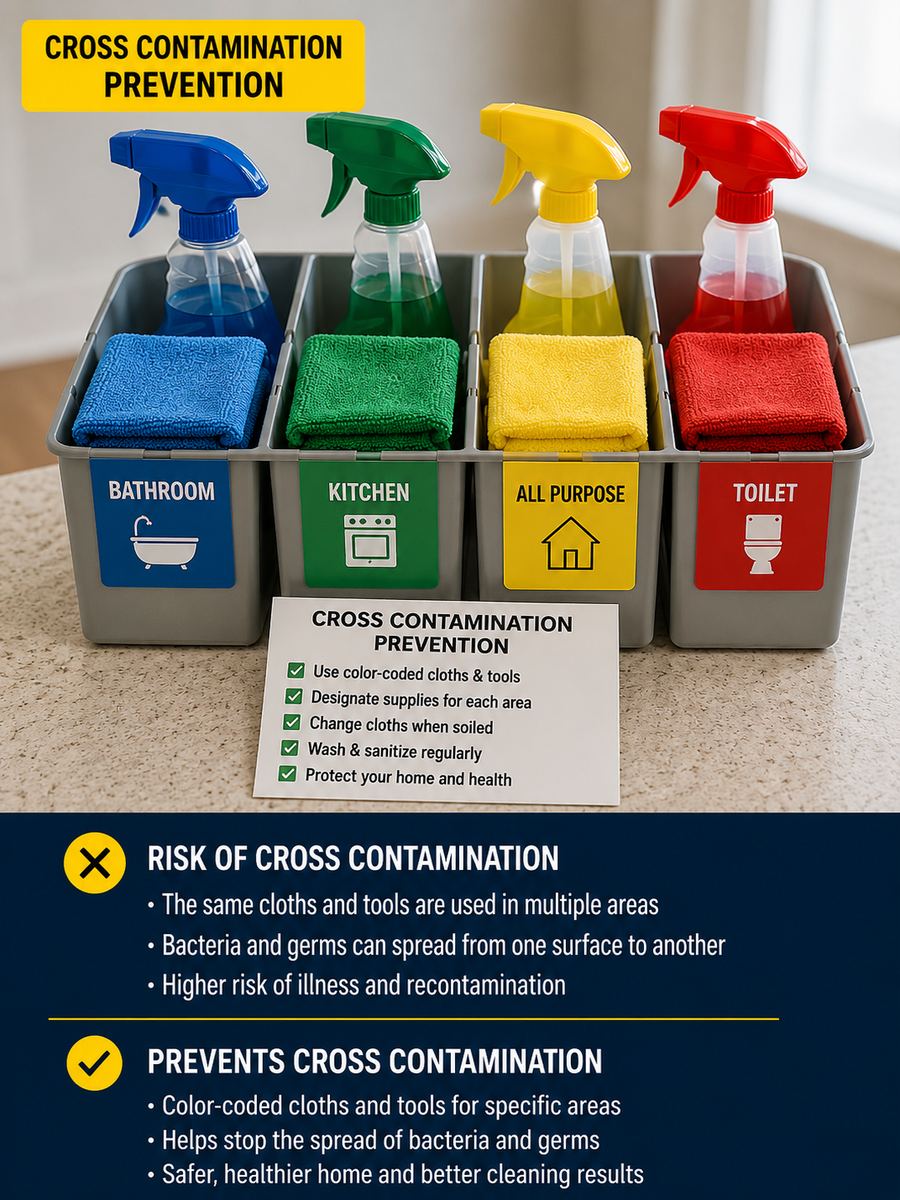
How Professional Cleaners Prevent Cross-Contamination
This connects directly to our broader cross-contamination prevention approach:
- Toilet tools remain dedicated to the toilet.
- Toilet cloths never touch sinks, counters, showers, or personal items.
- Gloves are changed, or hands are cleaned, after toilet work is finished.
- Clean and already-used cloths are kept physically separate.
- Floor tools remain floor tools.
- Bathroom tools aren't reused elsewhere in the home without proper cleaning or replacement.
- Fresh cloths and cleaning solutions are introduced as needed rather than stretched across the whole job.
- Already-cleaned zones aren't recontaminated by tools that have touched a dirtier area.
- Personal items are returned only after the treated surface is dry and safe.
Protecting Your Personal Items
Before cleaning countertops, we remove or protect items such as toothbrushes, toothpaste, mouthwash, contact-lens supplies, cosmetics, medications, towels, razors, and children's bath items.
- Chemicals are kept away from oral-care and personal-use items throughout the process.
- Products aren't sprayed over exposed personal items.
- Everything is returned only after the treated surfaces are fully dry.
- We'd also ask that you remove fragile or prescription items yourself when practical, just as an extra layer of care on your end.
When Bathroom Contamination Falls Outside Standard Cleaning
Some situations go beyond what routine bathroom cleaning is equipped to handle:
- Significant blood
- Vomit
- Fecal contamination outside the toilet itself
- Sewage backup
- Sharps or needles
- Extensive urine saturation
- Pest waste
- Unknown biological material
- Requests for active infectious-disease cleanup
- Extensive mold-like growth
Routine house cleaning is not biohazard remediation, sewage cleanup, sharps handling, mold remediation, or medical-grade infection control. If we encounter any of these conditions, we may stop, decline that portion of the work, or refer you to the appropriate specialist. We're not diagnosing pathogens or mold species — we simply recognize when a situation is outside the scope of a standard cleaning visit.
Ventilation and Chemical Safety
- Bathrooms are ventilated as required by the products being used.
- Products are never mixed with one another.
- Children and pets are kept away from wet, treated surfaces.
- Label-required gloves and other protective measures are followed.
- We avoid overspray near outlets, switches, electronics, and personal items.
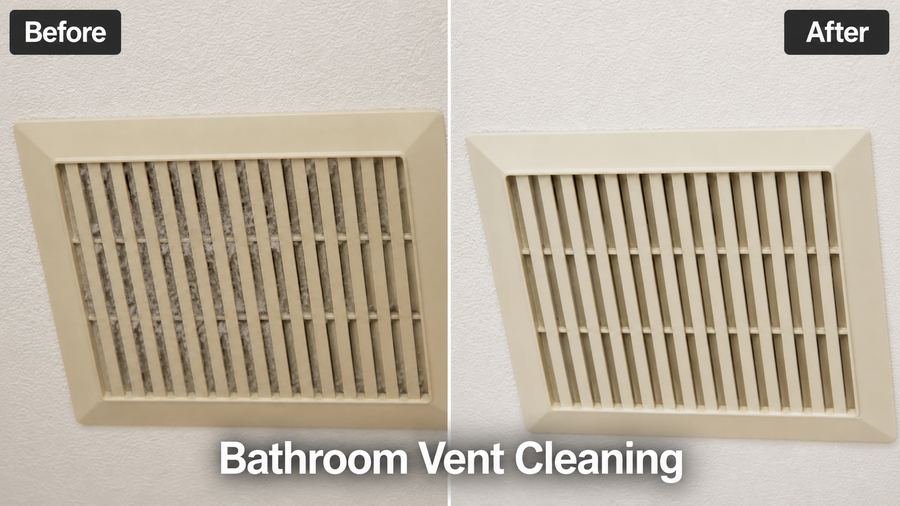
- Products are never sprayed directly into exhaust fans or electrical openings.
- Surfaces are allowed to dry before normal use, when the label calls for it.
We're not providing chemical recipes here — just the safety principles that guide how we handle products in a bathroom environment.
Is Professional Bathroom Cleaning Right for You?
It may be useful if:
- Hidden toilet residue is present in areas you can't easily reach yourself.
- Soap and body-oil buildup has accumulated over time.
- High-touch surfaces need careful, surface-appropriate treatment.
- You're scheduling a standard or deep cleaning.
- You're preparing for a move-in or move-out that needs detailed bathroom attention.
- You want a systematic, clean-to-dirty process rather than a quick wipe-down.
- Personal items and surfaces need careful protection during the process.
It may not be the correct service if:
- Sewage is present.
- Sharps or needles are present.
- Significant bodily fluids are involved beyond normal residential-cleaning scope.
- There's extensive mold-like growth.
- Active leaks remain unresolved.
- Fixtures are damaged or loose.
- Medical-grade infection control is what's actually being requested.
- The bathroom contains hazardous chemicals or unknown contamination.
DIY vs. Professional Cleaning
DIY may be appropriate for:
- Routine wiping between deeper cleanings.
- Light soap residue.
- Regular toilet and sink maintenance.
- Product-label-compliant disinfection you're already comfortable with.
- Homeowners familiar with the specific materials in their bathroom.
Professional cleaning may be useful for:
- Detailed hinge and fixture cleaning that goes beyond a quick wipe.
- Deep cleaning projects.
- Multiple bathrooms at once.
- Heavy buildup that's accumulated over a long time.
- Move-out cleaning where detail genuinely matters.
- Homeowners concerned about product compatibility with delicate surfaces.
- Systematic cross-contamination control across an entire home.
There's no shame in handling routine bathroom maintenance yourself — this guide is about recognizing when a more systematic approach adds real value.
How Cali Clean Team Cleans a Bathroom
We inspect before we clean, follow a clean-to-dirty workflow, and generally work top to bottom, left to right — clean first, disinfect second. Exact sequencing can shift based on room layout, but toilet tools and cloths never move to a cleaner zone once they've touched the toilet.
- Confirm the service scope with the homeowner.
- Remove or protect personal items before anything else begins.
- Inspect materials and existing damage — surfaces, hardware, and any visible issues.
- Dry-dust high surfaces first, following the top-down principle.
- Clean mirrors and other lower-risk surfaces.
- Clean countertops and sinks.
- Clean showers and tubs.
- Clean the toilet using dedicated tools — always last among the fixtures, as the highest-risk area.
- Change gloves or perform hand hygiene after toilet work.
- Vacuum floor edges and the open floor.
- Mop the floor.
- Apply final treatment to compatible high-touch surfaces, where appropriate.
- Observe the product's required contact time.
- Allow surfaces to dry.
- Return personal items once everything is dry and safe.
- Complete a final inspection.
The Cali Clean Standard
When a bathroom has been professionally cleaned by Cali Clean Team, it should feel fresh, clean, organized, and genuinely well-maintained — not just wiped down in a hurry. That confidence comes from a systematic process: addressing visible surfaces and the accessible hidden details, following an honest clean-to-dirty workflow, protecting personal items throughout, and applying appropriate treatment to high-touch surfaces where it makes sense.
We're not claiming sterilization or a germ-free result — that's not a claim any residential cleaning service should make. What we're describing is a thorough, systematic clean that goes further than a quick surface wipe. As we like to put it: a home's not really clean unless it's been Cali Clean.
North County San Diego Conditions
In our field experience, some fixtures in Carlsbad and Oceanside show more visible finish wear or mineral buildup than many inland fixtures throughout Vista, San Marcos, and Escondido. Results still depend heavily on water chemistry, finish, ventilation, age, products previously used, and maintenance history — location alone doesn't determine the outcome, and we've seen well-maintained coastal bathrooms in better shape than neglected inland ones.
Preparing for Service
- [ ] Remove prescription medications and valuables from the bathroom
- [ ] Put away toothbrushes and contact-lens supplies when practical
- [ ] Secure pets and children during the visit
- [ ] Report any leaks, loose fixtures, or damaged surfaces ahead of time
- [ ] Disclose any sewage, sharps, pest, or bodily-fluid concerns before we arrive
- [ ] Let us know if you have natural stone or another specialty finish
- [ ] Clear countertops where possible
- [ ] Provide ventilation access (open window, working exhaust fan)
- [ ] Please avoid mixing or applying your own chemicals shortly before we arrive
Setting Realistic Expectations
Cleaning may improve: soap residue, body oils, surface grime, dust, accessible urine residue, fingerprints, light removable mineral film, and high-touch surfaces when treated correctly.
Cleaning cannot repair: etched glass, corroded fixtures, failed caulk, loose toilet seats, cracked grout, permanent staining, leaks, sewage problems, mold behind walls, poor ventilation, or finish damage caused by previously used products.
We don't promise "germ-free," "sterile," or complete elimination of contamination — those aren't claims a residential cleaning service can honestly make. What we can promise is a systematic, thorough clean that addresses far more than what a quick wipe-down reaches.
Maintenance After Professional Cleaning
- Wipe spills and toothpaste residue promptly.
- Clean toilet hinges and mounting areas periodically, not just during deeper cleanings.
- Keep toothbrushes and personal items protected during any cleaning, including your own.
- Use products compatible with your specific surfaces — check before reaching for something abrasive or acidic.
- Follow disinfectant contact times listed on the product label.
- Never mix cleaning chemicals.
- Ventilate the bathroom during and after cleaning.
- Address leaks and failed caulk promptly rather than letting them linger.
- Replace loose or damaged toilet hardware rather than continuing to clean around it.
- Schedule recurring cleaning before buildup becomes severe.
Local Relevance
Cali Clean Team cleans bathrooms systematically throughout North County San Diego, including San Marcos, Carlsbad, Oceanside, Vista, and Escondido. Fixture condition depends more on water chemistry, ventilation, age, and maintenance history than on the specific city — though we do see somewhat more finish wear on coastal fixtures in our field experience.
Bathroom cleaning connects naturally with our shower descaling guide and bathroom vent cleaning guide for a complete bathroom refresh, and the same clean-to-dirty workflow informs our cross-contamination prevention standards across the whole home. It's included in our standard house cleaning, expanded during deep cleaning, and commonly bundled into move-out cleaning or a recurring cleaning schedule. Builders can have it included as part of post-construction cleaning, and the same baseboard-and-corner attention to detail from our baseboards and corner cleaning service carries into every bathroom floor edge. Commercial restrooms can find related guidance in our commercial cleaning services, or find your area on our San Marcos, Carlsbad, Oceanside, Vista, or Escondido service pages.