CALI CLEAN TEAMDone Right
Running the self-cleaning cycle loosens residue — it doesn't remove it. Years of baked-on grease and carbonized sugar still have to be physically scraped, scrubbed, and degreased by hand. Cali Clean Team restores ovens throughout North County San Diego with a detailed, manufacturer-aware process built to get real results without damaging your appliance.
Locally based in San Marcos, serving Carlsbad, Oceanside, Vista, San Marcos & Escondido.
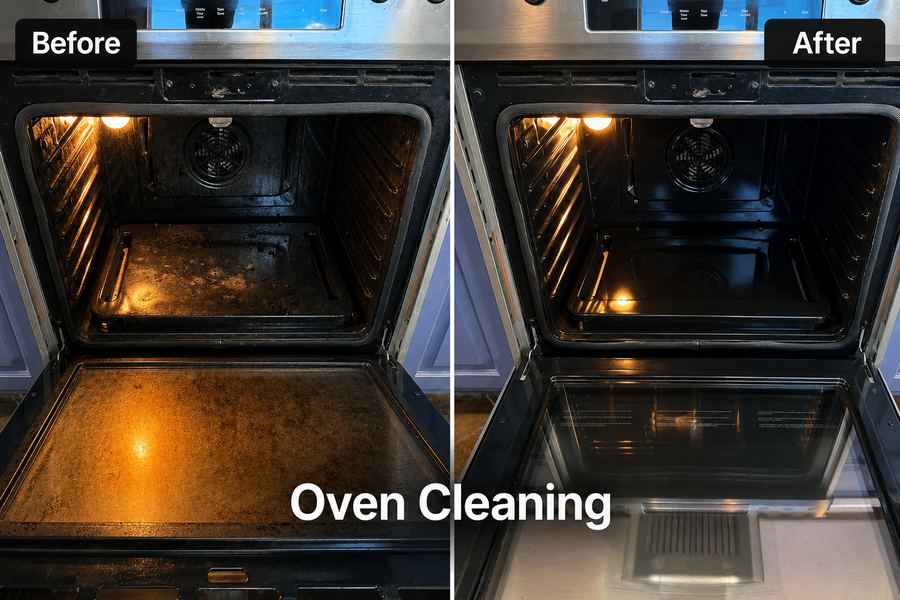
Here's a misconception we run into constantly: homeowners run their oven's self-cleaning cycle at 500–550°F for a couple of hours, then open the door expecting a spotless interior. It's rarely spotless. The high heat loosens and partially breaks down baked-on residue, but it still needs to be physically removed. That gap between what people expect and what actually happens is the single biggest misunderstanding we run into.
The other common DIY mistake is reaching for steel wool or SOS pads to cut through grease. Those aren't the right products for the job — they can scratch surfaces the self-cleaning cycle was supposed to make easier to maintain, not harder.
Not all grease is equal. The worst buildup we see comes from sugar-based cooking — barbecue sauce, spare ribs, sticky glazes, and sweet marinades. When these bake repeatedly without a pan underneath to catch drips, the sugars carbonize and bond tightly to the oven surface and glass, becoming far harder to remove than ordinary grease.
One of the techniques we rely on to set honest expectations is simple: we test the buildup with a razor scraper. The resistance we feel tells us whether we're dealing with removable baked-on grease and carbon, or permanent discoloration that no amount of scraping will fix.
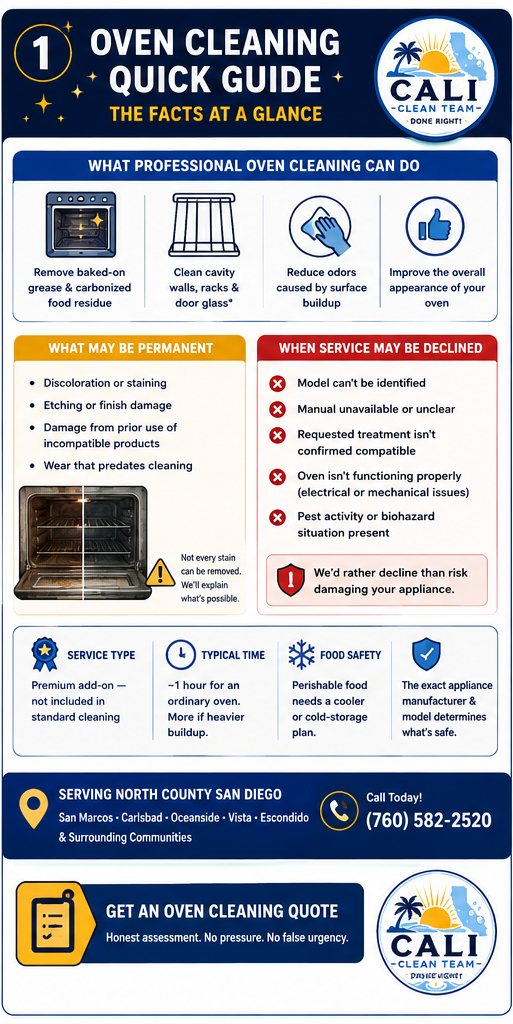
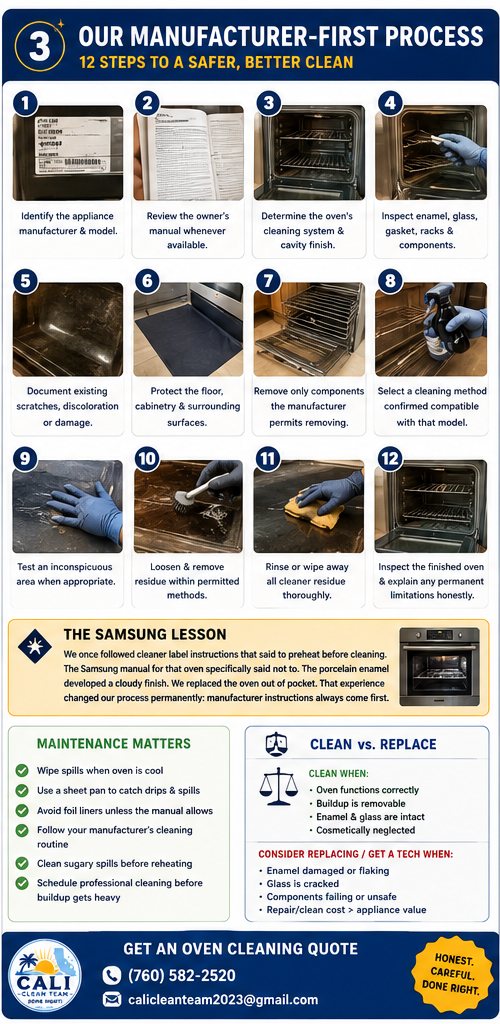
Oven cleaning is a premium add-on — it's detailed, physical work that isn't part of a standard cleaning visit. Here's our process:
Typical time: About an hour for a standard restoration.
One job stands out because of what it taught us, not because of a happy ending. A homeowner hired us to restore a heavily used Samsung oven with a porcelain enamel interior. At the time, we followed the instructions printed on the Easy-Off can, which recommended preheating the oven before cleaning. After the cleaning was done, the oven was clean — but the porcelain enamel had developed a cloudy white appearance that hadn't been there before.
We investigated rather than assuming it was leftover residue, and the homeowner eventually found the Samsung owner's manual, which specifically stated not to preheat that type of porcelain enamel oven before cleaning. The product instructions had conflicted directly with the manufacturer's own guidance.
Even though our insurance company declined the claim, we replaced the customer's oven out of pocket, because we had left the home in worse condition than we found it.
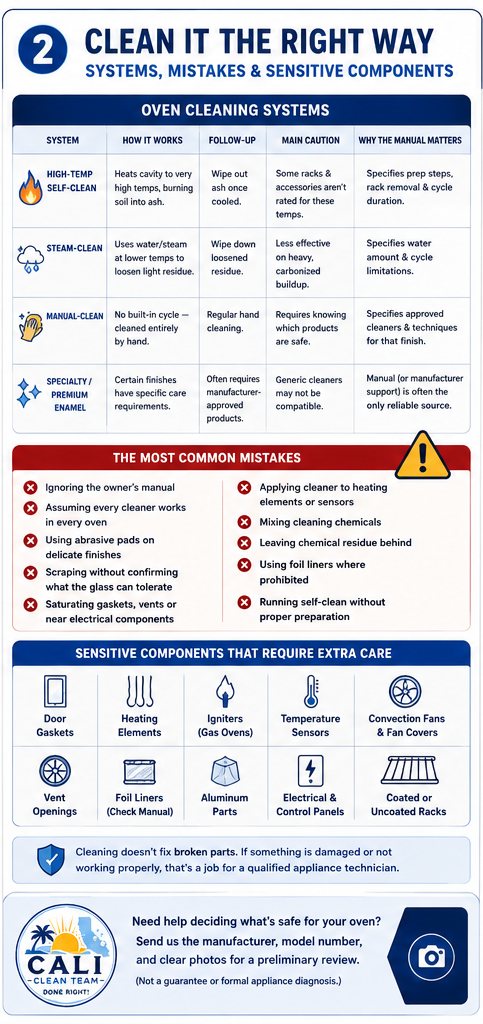
That experience permanently changed our process. Today, manufacturer instructions always take precedence over what's printed on a cleaning product. Premium porcelain enamel ovens are treated differently than standard ovens, and if there's any uncertainty about manufacturer recommendations, we'll decline the job rather than risk damage — the same way we ask specialty-oven customers to supply their own approved product and sign off on the results.
Unlike shower descaling, the regional difference with ovens isn't environmental — it's behavioral.
Carlsbad and Oceanside: Homeowners tend to cook at home less often, eating out or ordering in more frequently. Vacation homes and rental properties are common in these areas and typically show lighter buildup because occupants simply aren't cooking as much.
Vista, San Marcos, and inland communities: Families tend to cook at home more, meaning ovens see heavier daily use and more baked-on grease accumulates over years of regular cooking — which means more labor to restore.
The difference usually isn't the oven brand. It's how the household uses it.
What affects pricing: Oven size, oven type, age of the buildup, amount of baked-on grease, interior material (including whether it's a porcelain finish), and previous cleaning history.
When we decline service: We generally decline to clean porcelain ovens unless the customer specifically signs a release acknowledging they're directing us to follow instructions that aren't our own and agreeing to hold us harmless for the results.
What results to expect: Most oven cleanings restore the appliance to approximately 80–90% of its original appearance. We can't promise more than that until we're actually inside the oven working — and there's a real possibility that even 90 minutes of labor won't get very far in an oven that hasn't been touched in seven or eight years.
The point of diminishing return: At some point, additional labor and stronger chemicals only produce small cosmetic improvements. When an oven reaches that point, we help homeowners weigh professional restoration against the cost of replacing the appliance altogether, rather than continuing to spend money chasing a result that isn't coming.
Cali Clean Team cleans ovens throughout North County San Diego, and what we find inside them often reflects how each household lives more than where it's located. In Carlsbad and Oceanside, we frequently see lighter buildup, tied to more dining out and more vacation or rental properties. In Vista, San Marcos, and Escondido, we tend to see heavier daily cooking and correspondingly more baked-on grease from years of regular use. Wherever you're located, we evaluate your oven's actual condition — including checking for porcelain enamel or specialty finishes — before recommending an approach.
Not completely. It loosens and partially burns off residue, but baked-on grease and carbon still need to be physically scraped and scrubbed away.
Generally, we decline unless the customer signs a release acknowledging they're directing us to use a specific manufacturer-approved product and accepting responsibility for the outcome. We follow manufacturer instructions over product-label instructions.
Sugar-based foods — barbecue sauce, spare ribs, sticky glazes, and sweet marinades — carbonize and bond tightly to surfaces, making them much harder to remove than regular grease.
Typically about an hour for a standard restoration; heavier buildup can take longer.
Usually not completely. Most ovens can be restored to about 80–90% of their original appearance, depending on age and how long it's been since the last real cleaning.
Generally no — the heating element there makes it difficult to control the cleaning process safely, so we intentionally avoid that area.
Empty the oven completely, remove cookware, and let us know if you have a porcelain or specialty interior.
It depends on the point of diminishing return — if additional labor and chemicals are only producing minor cosmetic improvement, replacement may be the better value. We'll help you make that call honestly.
Want the full deep-dive? Read the Complete Guide to Professional Oven Cleaning & Restoration — our in-depth blog guide covering everything from common mistakes to real case studies.