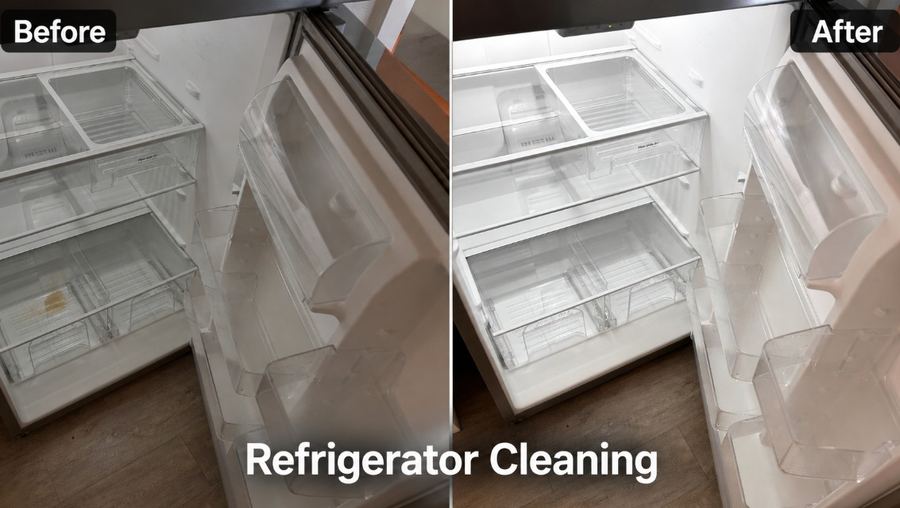
Refrigerator Cleaning at a Glance
| Best For | Refrigerators with hidden spills, unresolved odors, heavy buildup under drawers, or appliances neglected for an extended period |
| Service Type | Premium add-on — not included in standard house cleaning |
| Typical Time | Varies significantly by condition and complexity — refrigerator cleaning is generally priced and timed based on time and complexity rather than a flat rate |
| What May Improve | Visible and hidden residue, drawer tracks, removable components, accessible dispenser surfaces, general odor sources tied to surface-level buildup |
| What May Remain | Some plastic staining, mineral deposits on dispenser components, or odors originating from internal or mechanical sources that surface cleaning can't reach |
| Food-Preparation Requirement | Perishable food needs a cooler or cold-storage plan before the appliance is opened for extended cleaning |
| Most Important Safety Rule | The homeowner decides what food is safe to keep or discard — Cali Clean Team does not make that determination |
| When Service May Be Declined | If the appliance isn't cooling properly, shows signs of electrical or mechanical failure, or the situation requires pest remediation or biohazard cleanup |
| Cities Served | San Marcos, Carlsbad, Oceanside, Vista, Escondido, and surrounding North County San Diego communities |
What Professional Refrigerator Cleaning Includes
Professional refrigerator cleaning is a different service than several things people sometimes assume it covers:
- Wiping visible shelves — a normal part of everyday tidying, but not the same as detailed component-level cleaning.
- Throwing away expired food — something the homeowner decides on, not something we determine for you.
- Defrosting — sometimes part of the process when a freezer needs attention, but it requires planning, not a simple unplug-and-wait.
- Appliance repair — cleaning doesn't fix a refrigerator that isn't cooling properly or has an electrical or mechanical issue.
- Internal water-line cleaning — accessible exterior dispenser surfaces are different from the internal tubing and filtration system, which typically requires manufacturer service.
- Biohazard or pest remediation — situations involving these require a different specialist, not a cleaning service.
What professional cleaning does include: removing the components that are safe to remove, addressing the hidden areas routine cleaning misses, and giving you an honest picture of what improved and what didn't.
Where Refrigerator Odors Actually Come From
It's tempting to assume refrigerator odor always comes from one obvious source, but in our experience it can come from several different places — sometimes more than one at once:
- Spoiled or expired food — the most obvious source, but not the only one.
- Uncovered, strongly scented food — onions, certain leftovers, and some produce can affect the whole compartment.
- Hidden milk, juice, or food spills — often underneath drawers, where they go unnoticed for a long time.
- Raw-meat leakage — which also raises a cross-contamination concern, not just an odor one.
- Contaminated packaging — torn or leaking containers that have since been thrown away, leaving residue behind.
- Ice bins or water filters — components that can develop odor over time, particularly if not replaced or cleaned on a regular schedule.
- Drain pans or drainage issues — an often-overlooked source, especially on older appliances.
- Power loss — a temporary loss of refrigeration can allow food to spoil quickly and leave a lingering odor even after the food is removed.
- Mold or residue in inaccessible components — which may not be something surface cleaning can reach at all.
- Mechanical or cooling problems — sometimes an odor is actually a sign the appliance itself needs service, not cleaning.
Diagnostic Table: Possible Odor Sources
| Possible Source | What a Homeowner May Notice | Can Surface Cleaning Help? | When Another Professional May Be Needed |
|---|---|---|---|
| Spoiled/expired food | Sour or rotten smell, often traceable to a specific item | Yes, once removed and area cleaned | Rarely |
| Hidden spills under drawers | Odor persists even with a mostly-empty fridge | Yes, once the area is accessed and cleaned | Rarely |
| Raw-meat leakage | Odor near meat drawer or specific shelf | Yes, with proper cross-contamination handling | Rarely |
| Ice bin / water filter | Musty or stale smell near the dispenser or freezer | Sometimes, for accessible surfaces | Often — filters and internal systems may need manufacturer service |
| Drain pan / drainage | Musty smell, sometimes with visible moisture | Sometimes | Often, if drainage issue is mechanical |
| Power loss / spoiled bulk food | Strong odor throughout, even after cleanup | Partially | Occasionally, if odor has penetrated porous components |
| Mold in inaccessible areas | Persistent musty smell with no visible source | No | Yes — appliance technician |
| Mechanical/cooling issue | Odor combined with temperature problems or unusual sounds | No | Yes — appliance technician |
Hidden Areas Routine Cleaning Misses
The number one misconception we run into is that a refrigerator is clean because the visible shelves have been wiped. The dirtiest areas are almost always the ones nobody looks at:
- Beneath drawers — where spilled liquids run and settle, often unnoticed for months.
- Drawer tracks — narrow channels that trap residue routine wiping never reaches.
- Door-bin edges — where drips and residue accumulate along the seams.
- Gaskets — addressed carefully and only according to what the manufacturer permits, since gasket material and mounting can vary.
- Corners and seams of the interior cabinet.
- Removable trays and bins, cleaned separately rather than wiped in place.
- Accessible drainage areas, where visible.
- Ice bins and drip trays, when they're safely removable.
- Exterior handles and touchpoints, which are handled dozens of times a day.
We don't promise access to sealed or fully internal components — those are outside the scope of a cleaning service. But the areas listed above are exactly where hidden residue and odor most often originate, and they're the areas a quick wipe-down never reaches.
How to Protect Your Food During Refrigerator Cleaning
This part matters as much as the cleaning itself. A thorough refrigerator cleaning — especially one involving component removal or any period with the doors open — requires a real food-safety plan, not an afterthought.
What we want you to know before booking:
- Refrigerators should normally stay at 40°F or below. Perishable food shouldn't sit at room temperature for extended periods.
- You'll want to prepare a cooler with ice or cold packs in advance for anything that needs to stay cold during the service.
- Refrigerator and freezer contents may need separate storage plans, since freezer items can thaw faster once removed.
- We don't decide whether food is safe to eat — that call belongs to you.
- You'll need to approve the disposal of anything that's discarded during the cleaning; we don't throw food away without your say-so.
- If the job involves a longer cleaning process, thawing, or unplugging the appliance, that needs to be planned for in advance, not figured out on the day of service.
Homeowner Preparation Checklist
- [ ] Have a cooler (or two) ready with ice or cold packs before we arrive
- [ ] Decide in advance which items you're comfortable discarding versus keeping in the cooler
- [ ] Separate raw meat or leaking items ahead of time if possible
- [ ] Let us know if you have a freezer full of items that will need a plan during the service
- [ ] Flag any items you specifically want kept, regardless of condition
- [ ] Let us know your appliance's manufacturer/model if you have it handy
Cleaning vs. Sanitizing vs. Deodorizing
These terms get used interchangeably, but they're not the same thing, and it matters that we're precise about what we're actually doing.
| Term | What It Means | What Homeowners Should Know |
|---|---|---|
| Cleaning | Removes food, grease, and visible soil | Always comes first — nothing else matters until this step is done |
| Sanitizing | Reduces microorganisms using an appropriately labeled method | Requires the correct product, concentration, contact time, and rinsing instructions |
| Deodorizing | Removes or reduces odor sources | Does not necessarily sanitize the surface |
| Disinfecting | A specific antimicrobial claim | Not automatically appropriate for every refrigerator surface, especially food-contact areas |
We describe our refrigerator cleaning as thoroughly cleaned — that's the accurate claim for the process described in this guide. We don't market it as restoring your refrigerator to a "sanitary condition" unless a specific, label-compliant sanitizing protocol is being used and documented for that job.
Products and Methods We Use
We don't treat any single product as universally appropriate for every refrigerator. What's compatible depends on the appliance manual, the specific surface, and what kind of contamination we're dealing with. In general:
- Food-storage surfaces are rinsed where the product or manufacturer instructions call for it.
- We avoid abrasives and solvents that could damage plastic or interior finishes.
- Strong fragrances are generally avoided inside food or ice compartments, since they can transfer to stored food.
- Chemicals are never mixed.
- Both the manufacturer's instructions and the product label need to permit the method we're using — not just one or the other.
Products like Dawn dish soap, Dawn Powerwash, vinegar, or Mrs. Meyer's are sometimes used as examples of what might be appropriate for a given surface — but which one we reach for depends entirely on the appliance and the situation, not a fixed recipe applied to every job.
Removing Components the Right Way
Not every removable-looking part should actually be removed and washed the same way. Here's how we approach it:
- We remove only components designed to be removed — nothing gets forced.
- We never force shelves, drawers, or trim. If something doesn't come out easily, that's a sign to stop and reassess, not push harder.
- We let cold glass shelves warm up gradually before washing them. Taking a cold glass shelf straight into hot water risks thermal shock and cracking — we give it time to reach room temperature first.
- We don't submerge components that contain lighting, wiring, or electronic parts.
- We use cleaning methods compatible with the specific manufacturer's guidance, not a one-size-fits-all approach.
- We let every component dry fully before reassembly, to avoid trapping moisture that can lead to odor or mold.
The appliance manufacturer and model genuinely matter here — shelves can have different removal mechanisms, some contain lighting components, glass shelves can be vulnerable to thermal shock, drawers and trim can crack if forced, water filters and dispenser parts have model-specific instructions, and freezer defrost procedures vary by appliance. Identifying the appliance is part of the process, not an optional extra step.
Is Professional Refrigerator Cleaning Right for You?
It may be useful if:
- Hidden spills are present underneath drawers or in tracks.
- Drawers and bins need detailed, removed-and-washed cleaning rather than a wipe.
- Odors remain even after spoiled food has been removed.
- You're doing a move-in or move-out and need appliance detailing.
- The appliance functions correctly but has been cosmetically neglected.
- You can't safely remove components yourself.
- Hard-water residue is affecting accessible dispenser surfaces.
It may not be the right service if:
- The appliance isn't cooling properly.
- There's suspected electrical or mechanical failure.
- Internal tubing or sealed components are contaminated.
- There's pest activity present.
- The situation requires extensive biohazard remediation.
- There's unsafe food inside that hasn't been addressed yet.
- Moving or disconnecting the appliance would require plumbing or repair expertise beyond cleaning scope.
- Mold appears inside insulation or other inaccessible systems.
If any of those apply, the right next step is usually an appliance technician, pest control, or a remediation specialist — sometimes before cleaning, sometimes instead of it.
DIY vs. Professional Refrigerator Cleaning
DIY may be appropriate for:
- Fresh spills, addressed right away.
- Routine weekly maintenance and wiping.
- Normal shelf cleaning during regular tidying.
- Washing components the manual specifically says are safe to remove and wash.
- Regular inspection for expired or spoiled food.
Professional service may be useful for:
- Heavy, hidden buildup that's accumulated over a long time.
- Component removal that's difficult or uncertain to do safely.
- Move-out cleaning where appliance detailing is part of the scope.
- Persistent odor you haven't been able to track down.
- Refrigerators where access has been limited by clutter or storage.
- Detailed appliance cleaning bundled into a broader deep clean.
There's no shame in either path — most refrigerators get a mix of both over their lifetime. This guide is meant to help you recognize which situation you're actually in.
How Cali Clean Team Cleans a Refrigerator
We inspect before we clean, and we generally work top to bottom, left to right — though the sequence sometimes changes to prevent cross-contamination between a heavily soiled area and one that's already been cleaned.
- Confirm the scope of the job with the homeowner.
- Identify the manufacturer and model, when necessary, to understand component-specific requirements.
- Review the food-storage plan — coolers, cold packs, and what's being kept versus discarded.
- Document any existing damage before starting.
- Protect floors and surrounding surfaces.
- Remove only approved components — nothing forced.
- Allow cold glass to warm safely before washing.
- Wash or wipe each component appropriately, based on its material and the manufacturer's guidance.
- Clean hidden interior areas — under drawers, in tracks, corners, and seams.
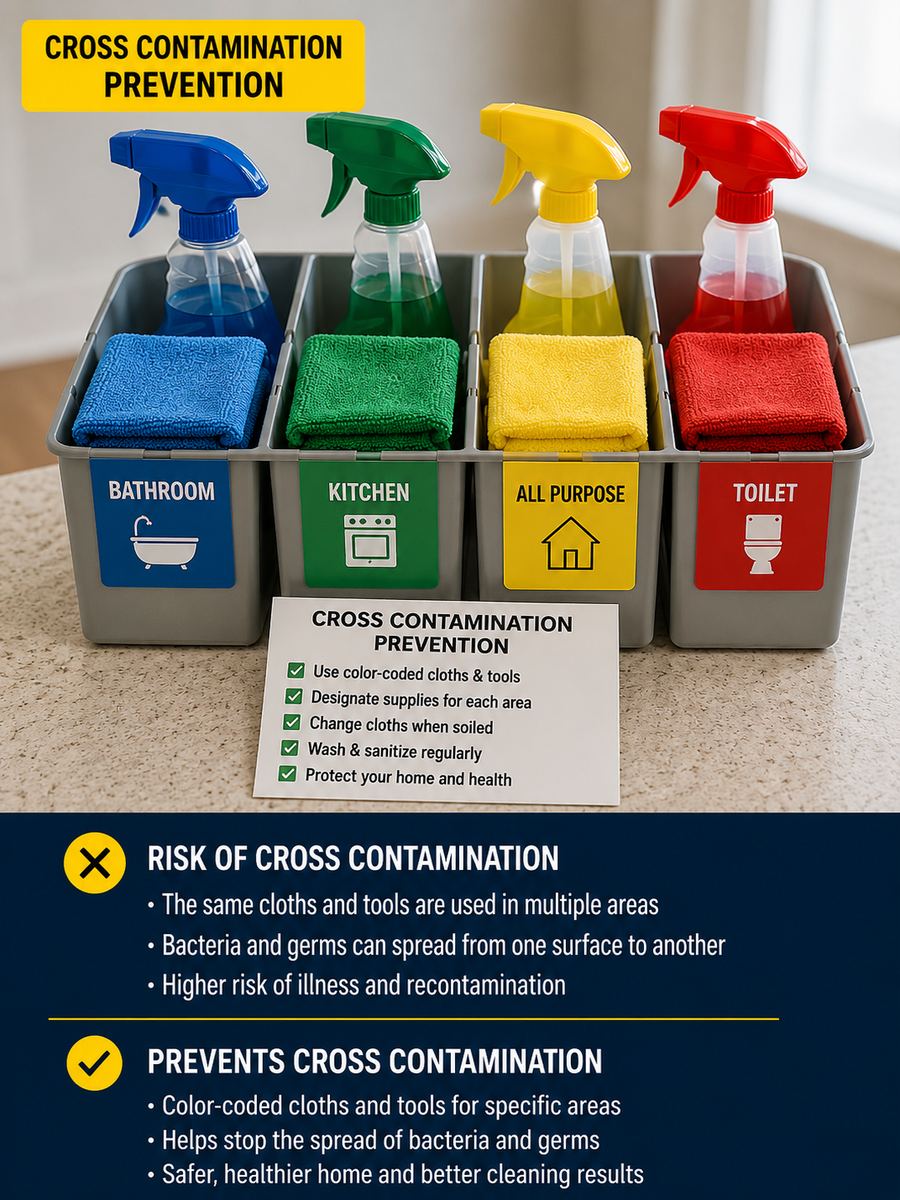
- Manage contaminated areas separately — raw-meat leaks and heavily soiled zones are handled with dedicated tools and fresh gloves, not the same cloth used elsewhere.
- Clean accessible dispenser and ice-bin surfaces, when that's included in the job.
- Dry all components fully before reassembly.
- Reassemble correctly.
- Restart or reconnect the appliance only when that's within scope — we don't take on electrical or plumbing work that falls outside cleaning.
- Final inspection, with an honest explanation of any remaining stains or odors that the process couldn't fully resolve.
A Real Case Study: Cleaning an Access-Limited Refrigerator
One of the more memorable refrigerator cleanings we've done involved a home where access to the appliance was genuinely limited. Food, clutter, and residue had built up to the point where simply reaching the areas that needed cleaning was part of the challenge — before any actual cleaning could begin.
We approached the job the same way we approach every job: respectfully and without judgment. Every home has its own story, and our focus stays on improving the condition of the appliance, not commenting on how it got there. In this case, a safe workspace had to be created before detailing could really begin, which took real time and added to the overall labor involved.
The lesson from that job applies broadly: preparation directly affects what a technician can accomplish in the time available. When a homeowner is able to do some organizing beforehand — clearing an obvious path, consolidating food, making room to safely remove shelves and drawers — technicians can spend more of their time actually cleaning the appliance instead of creating access to it. In situations involving significant clutter, pest activity, or unsafe conditions, organizing, trash removal, pest control, or a specialty remediation service may need to happen before or alongside a cleaning visit.
[Insert verified, non-identifying photographs here only if appropriate and available.]
Water Dispensers, Ice Makers, and Hard-Water Buildup
Refrigerator water and ice systems come with their own set of limits worth understanding before you book:
- Accessible dispenser surfaces — the exterior parts you touch and see — can generally be cleaned.
- Removable drip trays can typically be removed, washed, and dried like other components.
- Ice bins can usually be cleaned when they're safely removable.
- Water filters are a different matter — replacement and maintenance are typically manufacturer-specific and may fall outside a cleaning service's scope.
- Internal tubing is not something surface cleaning reaches or sanitizes.
- Ice-maker mechanisms are mechanical components, not cleaning targets.
- Inaccessible mold or contamination inside the system requires a different kind of service entirely.
- Mechanical problems with the ice or water system need an appliance technician, not a cleaning visit.
To be direct about what this means: Cali Clean Team can clean the accessible exterior and removable surfaces of your dispenser and ice system, when that's part of the job and the manufacturer permits it. Surface cleaning does not clean or sanitize the internal water lines. Filters, internal tubing, and mechanical systems may require manufacturer service or an appliance technician. Mineral staining on plastic dispenser components may not be fully reversible, and those plastic surfaces can't always tolerate aggressive abrasion or acidic products the way glass or metal might.
Refrigerator Cleaning and Food Safety
A few principles guide how we think about food safety during this service:
- Cold temperature matters — refrigerators should generally stay at 40°F or below, and perishable food shouldn't sit out for extended periods during cleaning.
- Spills should be addressed promptly, both by us during service and by you between visits.
- Raw-food leakage requires special handling to avoid spreading contamination to other areas.
- Cleaning does not make questionable food safe to eat — if something looks or smells off, cleaning around it doesn't change that.
- The homeowner decides what food to keep or discard. We're not going to make that call for you.
- A refrigerator that isn't cooling properly needs a repair evaluation, not a cleaning appointment.
We're not offering medical advice here — just the practical framework we use to keep the process safe for your food and your home.
Setting Realistic Expectations
What actually determines the result:
- The appliance's age and condition
- How long hidden spills have been present
- Whether any staining is permanent
- The actual source of any odor
- Plastic discoloration
- Gasket condition
- The appliance's specific design and accessibility
- Any water-system issues
- Previous power loss events
- The amount of food involved
- Whether defrosting or appliance movement is required
We don't promise that every odor will disappear — some odor sources, as covered above, come from places surface cleaning simply can't reach. We also don't promise a "sanitary" result unless a defined, label-compliant sanitizing protocol is actually being used for that visit. What we can promise is a thorough, honest cleaning of everything that's safely accessible, and a clear explanation of anything that couldn't be resolved.
Maintenance After Professional Cleaning
- Wipe spills promptly, rather than letting them sit.
- Check beneath drawers periodically — this is where hidden buildup most often starts.
- Discard spoiled food regularly rather than letting it accumulate.
- Store raw meat in leak-resistant containers to reduce the risk of hidden spills and cross-contamination.
- Keep strongly scented or uncovered foods covered.
- Monitor your refrigerator's temperature periodically.
- Clean door handles and touchpoints regularly — they're touched constantly.
- Replace water filters according to the manufacturer's guidance and schedule.
- Avoid forcing shelves or bins that don't come out easily.
- Follow your owner's manual for model-specific care.
- Schedule detailed cleaning before residue becomes severe — prevention is consistently easier than restoration.
Local Relevance
Cali Clean Team cleans refrigerators throughout North County San Diego, including San Marcos, Carlsbad, Oceanside, Vista, and Escondido. Refrigerator condition is generally influenced by usage, spill frequency, food-storage habits, number of occupants, and cleaning frequency — not by one type of household or neighborhood. One practical tip that applies everywhere: teaching kids to tell a parent right away when something spills makes a real difference. A spill cleaned immediately takes a minute; the same spill found months later, dried under a drawer, becomes a much bigger job.
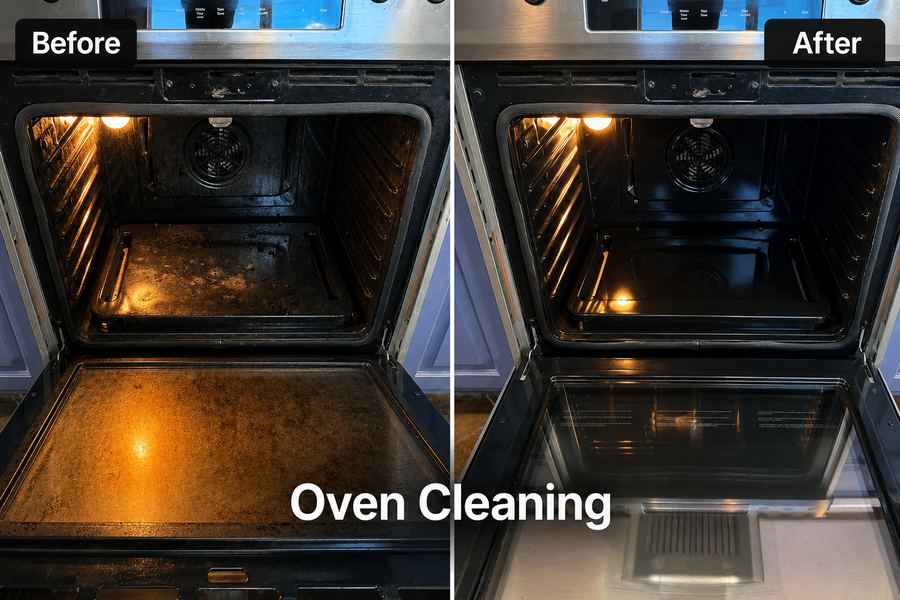
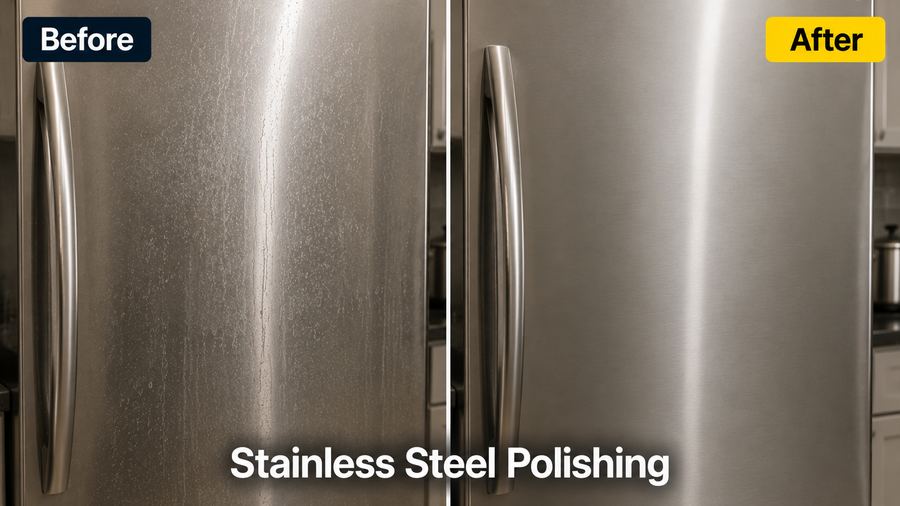
Refrigerator cleaning pairs naturally with our oven cleaning guide and stainless steel restoration services for a full kitchen-appliance refresh. Our cross-contamination prevention approach directly informs how we handle raw-meat leaks and heavily soiled areas during this service, and the same standards carry into our bathroom disinfection work. If you're preparing for a move, ask about adding refrigerator detailing to a move-out cleaning, or add it to your recurring cleaning schedule if you clean with us regularly. It's also commonly requested alongside a broader deep cleaning. Commercial kitchens can find related guidance in our commercial cleaning services, and general information is available on our house cleaning page or your local San Marcos, Carlsbad, Oceanside, Vista, or Escondido service page.