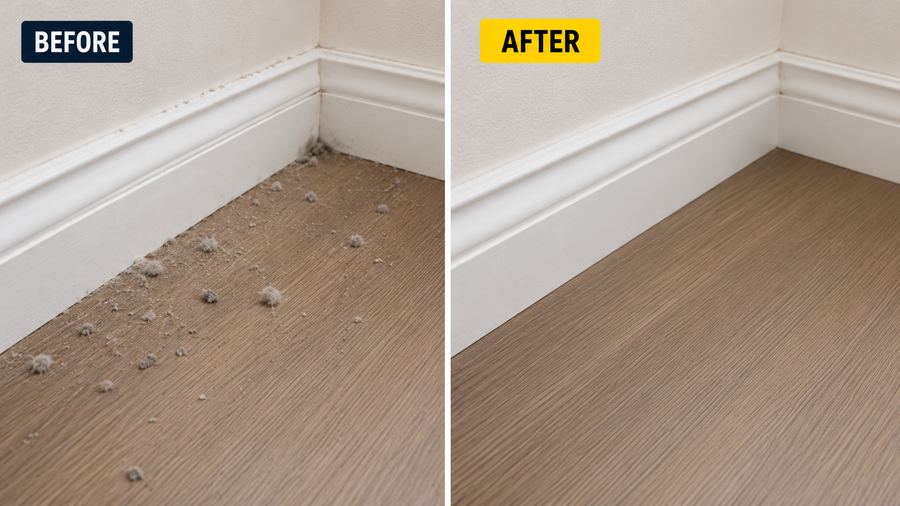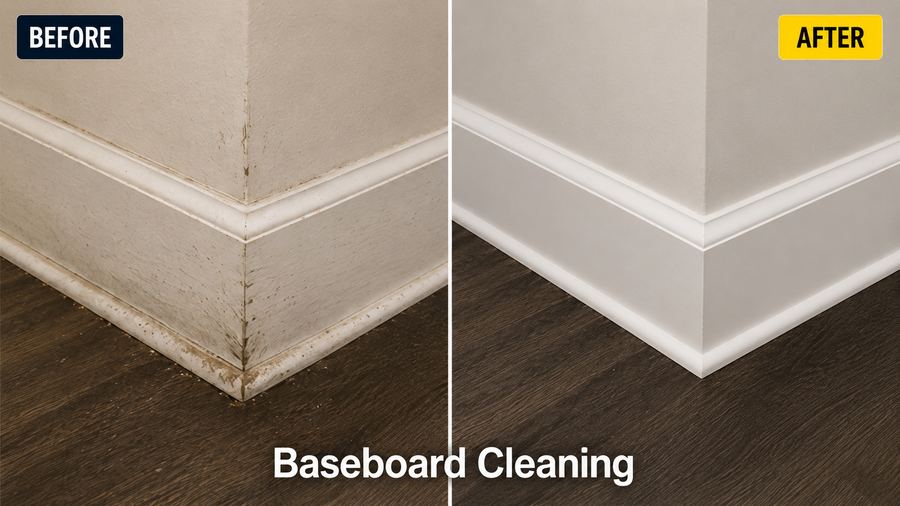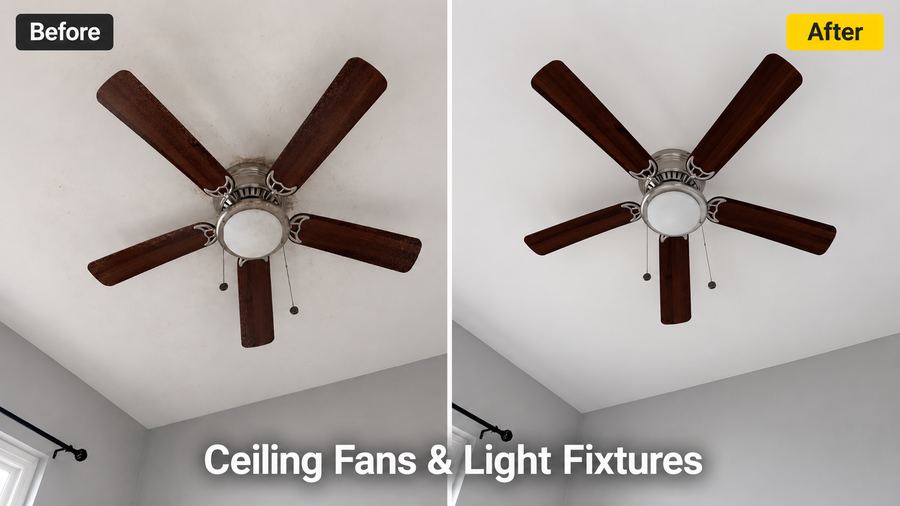
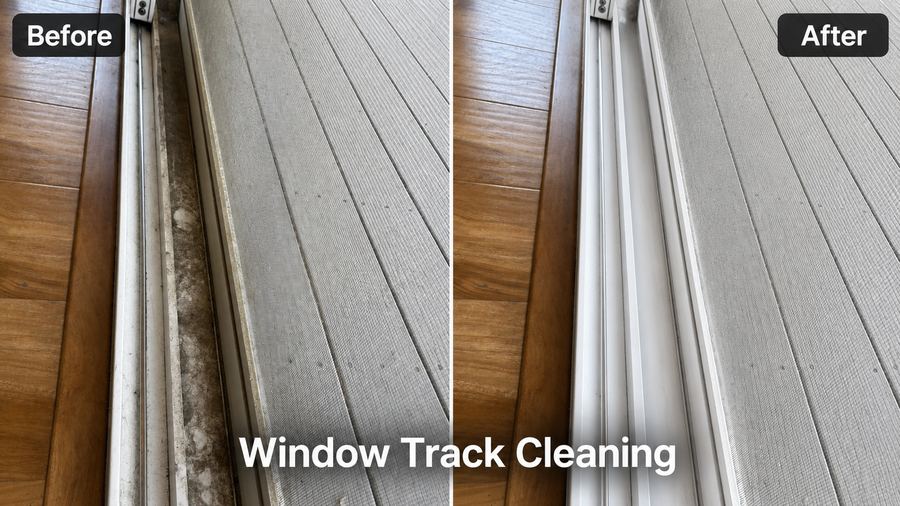
Window Track Cleaning at a Glance
| Best For | Window and sliding-door tracks with packed dirt, dust, dead insects, pet hair, or debris that's smeared into mud from previous spray-and-wipe attempts |
| Service Type | Performed as part of interior window cleaning — not typically included in standard maintenance cleaning |
| What's Included | Window sills (standard cleaning), and full track/channel detailing when paired with interior window cleaning |
| What's Not Included | Repair of tracks, rollers, locks, hardware, glass, or drainage systems |
| Typical Pricing Factor | Number of windows/sliding doors and the amount of compacted debris — not a flat per-window rate |
| What May Improve | Dust, dirt, loose grit, pet hair, dead insects, surface residue, dried spills, accessible debris around drainage openings |
| What May Remain | Oxidation, etching, finish loss, permanent staining, scratches, bent tracks, corrosion, failed hardware |
| Main Safety Rule | Remove loose, dry debris before introducing any liquid cleaner |
| When Service May Be Declined | Broken glass, active pests or droppings, extensive mold-like growth, suspected lead hazards, or unsafe access |
| Cities Served | San Marcos, Carlsbad, Oceanside, Vista, Escondido, and surrounding North County San Diego communities |
Why Window and Door Tracks Get So Dirty
Tracks collect debris from more sources than most homeowners realize:
- Airflow through open windows, carrying indoor and outdoor dust
- Outdoor dirt tracked in or blown in by wind
- Pet hair
- Dead insects
- Construction residue, if any recent work has been done nearby
- Landscaping debris — leaves, small twigs, dirt from gardening
- Moisture combining with dry soil to form a sticky residue over time
- Long intervals between detailed cleaning, since tracks are rarely part of routine housekeeping
Dust doesn't only enter through the window itself — it settles from general indoor air, gets tracked in on shoes and paws, and accumulates from outdoor sources near doors and landscaping. That combination is why even homes that are otherwise cleaned regularly can have surprisingly packed tracks.
Why Spraying First Creates Mud
The single most common mistake — by far — is introducing cleaner before removing the dry debris that's already there. Spraying directly into a dusty track and immediately wiping combines dust and dirt with liquid into a muddy residue that smears throughout the track, quickly soils microfiber towels, and makes detailed cleaning far more difficult than it needed to be.
Here's why the order matters:
- Dry dust becomes mud the moment it's saturated with liquid.
- Wet debris smears into corners instead of lifting out.
- Towels get overloaded and stop being effective almost immediately.
- Loose grit, when rubbed around while wet, can actually scratch certain finishes.
- Vacuuming and brushing first makes the wet-detailing step far more controlled and effective.
To be clear, this doesn't mean every single particle needs to be removed before any liquid touches the track — it means the bulk of the loose, dry debris should be cleared first, so the wet-detailing step is addressing residue and light film rather than fighting through packed dirt.
Window Tracks vs. Sliding-Door Tracks
These aren't identical services, even though they share the same underlying dry-first principle.
| Feature | Window Tracks | Sliding-Door Tracks |
|---|---|---|
| Typical debris | Dust, insects, hair, light soil | Dust, grit, exterior debris, pet hair, often heavier buildup |
| Hardware concerns | Sash guides, locks, weep openings | Rollers, thresholds, locks, drainage |
| Cleaning time | Usually shorter per opening | Often longer, due to size and typically heavier buildup |
| Repair boundary | Sash or frame problems | Roller, track, or alignment problems |
Both are cleaned using the same loosen-remove-detail sequence, but sliding-door tracks tend to see heavier traffic, larger openings, and more exposure to outdoor debris, which is part of why they often take longer to detail properly.
Window and Frame Materials
The material a track and frame are made from affects which tools and cleaners are appropriate — there's no single method that works safely across every material.
| Material | Cleaning Concern | Common Permanent Condition | Main Precaution |
|---|---|---|---|
| Vinyl | Generally easier to clean; smoother surface | Can discolor or become brittle with age/UV exposure | Avoid harsh solvents that can degrade the material |
| Painted aluminum | Paint can wear or chip if scraped aggressively | Oxidation, chipped paint, corrosion over time | Avoid abrasive tools directly on painted surfaces |
| Anodized aluminum | More resistant to corrosion than painted aluminum, but still not immune | Surface dulling, pitting in older or coastal-exposed units | Avoid aggressive acidic cleaners |
| Fiberglass | Generally durable | Can show UV fading over time | Avoid abrasive pads that dull the finish |
| Wood | Requires the most caution around moisture | Swelling, rot, or finish failure if over-wetted | Minimize standing moisture; use appropriate wood-safe products |
| Composite | Varies by manufacturer | Varies by manufacturer | Follow manufacturer guidance where available |
Not every home has one of these exact systems, and some homes mix materials across different windows and doors. We identify the material and finish before selecting tools and cleaners rather than applying the same approach everywhere.
Weatherstripping, coated hardware, security sensors, drainage components, screens, rollers, and locks all factor into this decision too — a tool or cleaner that's fine on bare aluminum track may not be appropriate near a security sensor or a rubber weatherstrip.
What Window Weep Holes Do — and What Cleaning Cannot Fix
Weep holes are drainage openings found on many windows and sliding doors, designed to let water that gets into the track drain back out rather than pool or seep inside. Their location and design vary significantly by manufacturer and window system — some are visible from inside, some from outside, and some from both.
Here's what we do, and don't do, with them:
- We keep accessible weep openings clear according to general manufacturer guidance, using gentle tools rather than anything aggressive.
- Cleaning visible openings may support the drainage the window was designed to have.
- It does not confirm that the entire internal drainage pathway — much of which isn't visible or accessible — is actually clear.
- It does not repair problems with flashing, installation, sealant, the frame itself, or water intrusion from other sources.
If you're dealing with persistent water pooling or an actual leak, that's a job for a window contractor, not a cleaning service. We can clear what's visible and accessible, but we can't promise that solves a drainage or water-intrusion problem with a different root cause.
Older Painted Windows and Possible Lead Dust
This is worth addressing directly and calmly, without causing alarm.
Homes built before 1978 may contain lead-based paint, and window friction combined with deteriorating paint can create dust that settles in sills and troughs over time. Ordinary track detailing is not lead inspection, testing, or abatement — we're not equipped or qualified to make that determination just by looking at a window.
If we notice suspicious flaking paint or dust that raises a concern, we won't aggressively scrape or vacuum it with ordinary equipment. In that situation, we may stop or decline the ordinary cleaning service for that specific window and recommend a lead-safe certified professional instead. HEPA procedures may be appropriate when a lead hazard is known or suspected, but that's a different scope of work than standard track cleaning.
We're not diagnosing lead paint by appearance, and we're not providing abatement guidance here — this section exists so you know why we sometimes pause or decline work on an older, deteriorating window rather than proceed as usual.
Separating Cleaning From Repair
Cleaning removes accessible dirt and debris. It does not repair:
- Bent tracks
- Broken rollers
- Damaged locks
- Warped frames
- Failed seals
- Cracked glass
- Corroded hardware
- Misalignment
- Installation problems
- Water intrusion
Is Professional Track Cleaning Right for You?
It may be useful if:
- Tracks contain packed dirt or grit that regular wiping hasn't resolved.
- Spraying and wiping has only smeared the residue into mud.
- Dead insects or pet hair are trapped in corners.
- Sliding-door thresholds have heavy accumulated debris.
- You're already scheduling interior window cleaning.
- You're doing a move-in, move-out, or deep cleaning that should include detailed tracks.
- Accessible drainage openings have visible debris.
It may not be the correct service if:
- The glass is broken.
- Frames or tracks are bent.
- Rollers or locks have failed.
- Water intrusion is coming from an installation or flashing issue.
- Active pests or droppings are present.
- There's extensive mold-like contamination.
- Paint is deteriorating and lead is known or suspected.
- Access would require unsafe ladder work or exterior work beyond our scope.
DIY vs. Professional Track Cleaning
DIY may be suitable for:
- Light dust and routine vacuuming.
- Debris that's easily accessible without disassembly.
- Manufacturer-approved gentle cleaning products for your specific frame material.
Professional detailing may be useful for:
- Compacted, long-neglected debris.
- Multiple windows or sliding doors at once.
- Move-out cleaning where tracks need to look their best.
- Older frames where the right product/tool combination isn't obvious.
- Difficult corners that are hard to reach with basic tools.
- Heavy buildup that's already been smeared into mud from a prior spray-first attempt.
- Homeowners concerned about damaging finishes or drainage components themselves.
There's nothing wrong with doing this yourself for routine maintenance — the goal here is helping you recognize when a track has moved past what a quick DIY pass can reasonably fix.
How Cali Clean Team Cleans Tracks
We follow the same underlying philosophy throughout: loosen, remove, detail — and top to bottom, left to right whenever the layout allows for it. Not every component gets the same tool or product; the material and condition determine that.
- Confirm the scope of the service with the homeowner.
- Inspect the glass, frame, track, hardware, and surrounding paint before starting.
- Identify the material and finish — vinyl, aluminum, wood, or another material.
- Check for unsafe conditions — pests, mold-like growth, suspected lead concerns, broken glass.
- Protect surrounding floors and furnishings.
- Loosen compatible dry debris using material-safe tools.
- Brush debris into accessible areas rather than pushing it deeper into the track.
- Vacuum with appropriate equipment, using a crevice attachment for tight spaces.
- Use HEPA procedures when required and within our scope — for example, in situations involving suspected contamination that doesn't require a full remediation referral.
- Apply a compatible cleaning solution only after dry debris removal.
- Detail corners and channels without damaging weatherstripping or drainage components.
- Gently clear accessible weep openings, when that's included and appropriate for the window system.
- Dry the track.
- Inspect the result.
- Explain honestly any permanent material wear or mechanical problems we noticed along the way.
What Cleaning Can — and Cannot — Improve
| Can Usually Be Removed | Usually Permanent (Cleaning Won't Fix) |
|---|---|
| Dust | Oxidation |
| Dirt | Etching |
| Loose grit | Finish loss |
| Pet hair | Permanent staining |
| Dead insects | Scratches |
| Surface residue | Bent tracks |
| Dried spills | Corrosion damage |
| Accessible debris around drainage openings | Failed hardware / water intrusion |
We don't use the word "restoration" to promise a like-new material condition — cleaning removes contamination, it doesn't reverse years of material wear.
Field Observations: North County San Diego Conditions
In our field experience, some aluminum frames in Carlsbad and Oceanside show more visible oxidation, finish wear, or salt residue than many inland frames throughout Vista, San Marcos, and Escondido. That said, condition still varies by finish, age, exposure, and maintenance — location alone doesn't determine the result, and we've seen well-maintained coastal frames in far better shape than neglected inland ones.
One consistent pattern we do see is tied to frame age rather than geography: newer homes typically have vinyl frames, which tend to be easier to clean and hold up better over time. Older homes more often have aluminum frames, which can show more oxidation and rougher finishes that hold onto dirt more easily — regardless of which North County community the home is in.
Real Case Study: Two Tracks, Two Outcomes
A useful comparison from our field experience involves two tracks we've cleaned in different homes: an older aluminum sliding-door track showing visible oxidation along the finish, and a newer vinyl window track with heavy but ordinary dust and debris buildup.
On the older aluminum track, dry debris removal and detailed cleaning removed the accumulated dirt, hair, and grit — but the oxidation on the aluminum finish itself remained, exactly as expected, because oxidation is a permanent material condition that cleaning doesn't reverse. On the newer vinyl track, the same process removed nearly all of the visible dust, debris, and light staining, leaving the track looking close to its original condition, because vinyl doesn't oxidize the way aluminum does and the debris itself was the primary issue.
The lesson here isn't about one track being "better" than the other — it's that the starting material determines what a thorough cleaning can realistically achieve. We're upfront with homeowners about that distinction before we start, not after.
Preparing for Service
- [ ] Move fragile objects away from window and door areas
- [ ] Provide safe access to all windows and sliding doors included in the service
- [ ] Secure pets during the visit
- [ ] Let us know about any broken glass or hardware issues ahead of time
- [ ] Disclose alarm contacts or window sensors near the tracks
- [ ] Let us know whether screens or blinds need to be handled or removed
- [ ] Confirm whether interior windows, exterior windows, or tracks specifically are included in your service
- [ ] Mention any known water intrusion, pest activity, mold, or lead paint concerns
- [ ] Avoid spraying cleaner into the tracks before we arrive — dry debris removal works best as the first step, and we'd rather start with what's actually there
Setting Realistic Expectations
- Dirt, dust, hair, and loose debris can usually be removed substantially.
- Permanent oxidation and etching remain exactly that — permanent.
- Cleaning may improve how a window or door slides, but only when accumulated debris was actually the cause; mechanical issues need a repair professional.
- Clearing accessible drainage openings does not repair leaks caused by installation, flashing, or sealant problems.
- Older frames may still look aged after cleaning, even when they're genuinely as clean as they can get.
- Results vary by design, material, and how accessible the track actually is.
- Sliding-door tracks may take more time than window tracks, simply due to size and typical debris load.
We don't promise a "like-new" result — we promise a genuinely thorough cleaning of what's actually removable.
Maintenance After Professional Cleaning
- Vacuum loose debris periodically, before it has a chance to compact.
- Wipe light residue before it becomes packed and harder to remove.
- Avoid flooding tracks with cleaner during routine upkeep.
- Keep accessible weep openings clear according to your window's manufacturer guidance.
- Address any water pooling promptly, and involve a window contractor if it persists.
- Keep pet hair and landscaping debris under control near frequently used doors and windows.
- Follow your window manufacturer's care instructions where available.
- Call a repair professional for hardware, roller, or leak problems — cleaning won't resolve those.
Local Relevance
Cali Clean Team details window and sliding-door tracks throughout North County San Diego, including San Marcos, Carlsbad, Oceanside, Vista, and Escondido. Frame age, material, exposure, and maintenance history matter more than which city a home is in — though our field experience does show somewhat more oxidation and finish wear on coastal aluminum frames than on many inland ones. Wherever you're located, we identify the material and condition on-site before selecting tools and products, rather than assuming a fixed process for every home.
Window track cleaning pairs naturally with our full interior window cleaning service, and the same dry-first, material-aware philosophy carries into our baseboard and corner cleaning and dust bunny removal work. If you're preparing for a move, this is commonly added to a move-out cleaning, and it's frequently bundled into a broader deep cleaning or a post-construction cleaning project. Recurring clients can add it to a recurring cleaning schedule, and the same material-first thinking shows up in our shower descaling guide. Commercial properties can find related information in our commercial cleaning services, and general information is on our house cleaning page or your local San Marcos, Carlsbad, Oceanside, Vista, or Escondido service page.